
Imagine: it’s a quiet Wednesday afternoon. Until now anyway… Your youngest son is sitting on the floor. His face is flushed red. Tears are streaming down his cheeks as he screams for a toy that his brother has. Your oldest son holds the toy high above his head, a triumphant grin on his face. You’ve tried to mediate, negotiate, even beg, but nothing seems to work. The tension rises, the headache begins, and you wonder: “Is there a better way to handle this?”
If this scenario sounds familiar, you’re not alone. Parents all over the world struggle with similar situations. Raising children is a challenging task, filled with moments of joy, but also with moments of frustration and uncertainty. How do you deal with unwanted behavior?
Welcome! In this blog post, we explore the first of a series of approaches to constructively deal with unwanted behavior in children. This is part of a larger series in which we examine different methods, each with their own unique approach and philosophy. In this post, we focus on the 1-2-3 Magic method, developed by Dr. Thomas Phelan.
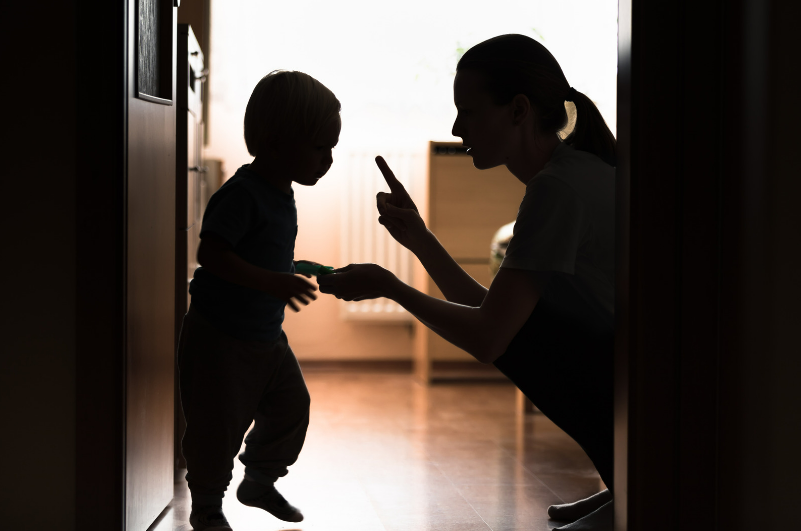
What is the 1-2-3 Magic Method?
The 1-2-3 Magic method offers an effective strategy to manage the so-called ‘stop behavior’ in children. Think of behaviors like tantrums, whining or arguing, which you as a parent would like to end. This method stands out for its clear, understandable steps. They are easy to follow for both you as a parent and for your child.
Counting
Imagine: your child is exhibiting behavior that you’d rather not see. Instead of responding with frustration or anger, you remain calm. You start counting. “That’s 1,” you say, as a friendly but clear warning. This signal lets your child know that his or her behavior is not acceptable. A change is needed!
If the behavior continues, then you proceed with “That’s 2”. This second warning reinforces the signal that your child needs to adjust his or her behavior. Crucial here is that you as a parent do not argue with your child and keep your emotions under control. The goal is to give your child the opportunity to correct his or her behavior themselves.
Time-out
If the unwanted behavior still continues after the second warning, then follows “That’s 3, time-out”. This time-out is a separation of the child. A while without communication and stimuli. How long? Well, Dr. Phelan suggests 1 minute per year. If your child is 5, then a time-out lasts 5 minutes. Dr. Phelan does not see this as a punishment. According to him, it is an opportunity for your child to calm down and reflect on his or her actions. It is a moment of reflection. The intention is to help your child understand that unwanted behavior has consequences.
The power of the 1-2-3 Magic method lies in its consistency and patience. This approach promotes respect for the child and at the same time sets clear boundaries on what is acceptable behavior. It enables parents to deal with their child’s behavior in a constructive way. The child is also given the chance to learn and grow.
No high emotions, no shouting, no preaching, no cursing, physical punishment,… Magic!

The Basic Ideas of 1-2-3 Magic
This method has a number of core ideas:
Many parents make the mistake of thinking that children are little adults
According to Dr. Phelan, children are not little adults. You can’t reason with them as you would with adults, especially when they’re misbehaving. Their brains have not yet developed sufficiently for this.
Common mistakes by parents: reacting emotionally and talking too much
When a child misbehaves, parents often react emotionally: they get angry. Or they talk too much: they hope that by talking (and preaching) the child will come to understand and stop.
Talking and explaining too much can irritate and distract children, while too much emotion, especially anger, can be destructive and lead to ineffective disciplinary attempts. The 1-2-3 Magic method suggests avoiding these mistakes for more effective discipline and a more harmonious family life.
The distinction between stop and start behavior
An important aspect of the 1-2-3 Magic method is the distinction between stop and start behavior. Stop behavior is unwanted behavior that you want to stop: whining, being disrespectful, arguing, and so on. Start behavior, on the other hand, are positive activities that you want your child to start: cleaning up their room, doing their homework,…
This distinction is crucial because the method suggests different tactics for each type of behavior. For stop behavior, the 1-2-3 or “counting” procedure is used, while for start behavior a choice of seven tactics is offered.
How can you explain the method to your child?
- Familiarize the child with the concept of counting as a warning:
Start by explaining that you’re going to try a new way to help them improve their behavior. Explain that you’re going to count from 1 to 3 if they do something they’re not supposed to. - Explain the steps:
Tell them that when they do something they’re not supposed to, you’ll first say “That’s 1”. This is a warning that they need to stop what they’re doing. If they continue, you say “That’s 2”, which is a second warning. If they still don’t stop, you say “That’s 3, time-out”, and then they have to sit apart for a while to calm down. - Emphasize that it’s not a punishment, but a chance to learn:
It’s important to emphasize that the time-out is not a punishment, but a chance for them to reflect on their behavior and calm themselves down. Explain that everyone sometimes needs a break, and that this is a way to help them learn how to improve their behavior. - Give them the chance to ask questions:
After explaining the method, give them the chance to ask questions. This can help them better understand what is expected of them and how the method works.
Be patient and consistent. It may take a while for your child to fully understand how the 1-2-3 Magic method works. Be patient and stay consistent in your approach. Remind them that the goal is to help them improve their behavior, and that you’re there to support them.
By explaining the method in this way, your child can gain a better understanding of what is expected of them and how they can improve their behavior.

Frequently Asked Questions
How long should there be between two counts?
There is no strict rule for how long there should be between two counts in the 1-2-3 Magic method. However, it is important to give your child enough time to correct his or her behavior. A general guideline could be to wait a few seconds to a minute between counts, depending on the situation and the child.
What exactly is a time-out?
A time-out is a short period in which the child is removed from the situation causing the unwanted behavior. This could be in his or her room, for example. It’s not a punishment, but rather an opportunity for the child to calm down and reflect on his or her behavior. The duration of the time-out can vary, but a general guideline is one minute per year of the child’s life.
Are there alternatives to a time-out?
Yes, there are alternatives to a time-out. These can vary depending on the situation and the child. Examples could be: temporarily taking away a privilege, such as playtime or a favorite toy, or having the child do a quiet activity, such as reading a book or doing a puzzle.
Do you always have to count to 3?
No, you don’t always have to count to 3. If the child’s behavior improves after the first or second warning, then it is not necessary to continue counting. The purpose of counting is to give the child the opportunity to correct his or her behavior, not necessarily to lead to a time-out.
There are situations where it may be appropriate to give a time-out immediately, without first counting. This could be the case with particularly severe or dangerous behavior. For example, if a child does something that is dangerous to themselves or others, it may be necessary to intervene immediately with a time-out.
However, it is important to remember that counting in the 1-2-3 Magic method is intended to give children the opportunity to correct their behavior before they get a time-out. Skipping the counting should therefore be the exception.
What exactly do you do when you reach 3?
It is also crucial to talk to the child after the time-out about what happened and why their behavior was unacceptable, to help them learn and grow from the experience.
- Stay calm: It is essential to remain calm and composed during this process. Getting angry or showing your frustration can escalate the situation and undermine the child’s learning process.
- Avoid talking: The 1-2-3 Magic method emphasizes the principle of “no talking, no emotion”. This means that you should avoid talking or arguing with your child during the time-out process. It is not the time to negotiate or reason with your child about their behavior.
- Give clear instructions: Lead your child to the time-out spot with clear and concise instructions. Avoid long explanations or discussions.
- Ensure a safe time-out spot: The time-out spot should be a safe, quiet space where your child can cool down. It should be free from distractions such as toys, electronics, etc.
- Keep the time-out short: The duration of the time-out should be appropriate for the child’s age. A general rule is one minute per year of the child’s life.
- After the time-out: When the time-out is over, it is important to let the incident rest and move on. It is not necessary to discuss the behavior immediately again. That can be done a little later.
What do you do after a time-out?
- Let the incident rest: After the time-out is over, it is important to let the incident rest. It is not necessary to discuss the behavior that led to the time-out again, unless the child wants to talk about it themselves. The goal is to let the child learn from the experience and move on.
- Show affection: Let your child know that you still love them, despite the behavior that led to the time-out. This can be done by giving a hug, a kiss, or a kind word. This helps to assure the child that the time-out is not a sign of rejection, but a way to help them learn better behavior.
- Continue with the day: After the time-out, you continue with the day as if nothing has happened. This helps the child learn that they get a second chance to display the right behavior.
- Talk about it when the child is ready: If your child wants to talk about what happened, listen and affirm their feelings. Use this as an opportunity to talk about better ways to handle similar situations in the future.
What if you’re not at home?
The 1-2-3 Magic method can also be applied when you’re not at home. The most important thing is to remain consistent in your approach, regardless of the location. For instance, if you’re in a store and your child starts to whine, you can still start counting. If the behavior continues and you reach 3, you can use an alternative time-out. You can briefly interrupt shopping and go with your child to a quiet place or even to the car.
But does it work?
There hasn’t been much scientific research conducted on the 1-2-3 Magic method. The conclusion from the few studies that have been done is that the method is effective and applicable.
However, Dr. Phelan’s website claims that the program has helped millions of families become happier and more connected. The program is designed to be simple and effective and is suitable for children from two to twelve years old. According to the website, it is very effective for children with ADHD, learning disorders, and other challenges. The book “1-2-3 Magic: Effective Discipline for Children 2-12” has sold more than 1.8 million copies and has been translated into more than twenty languages.
Conclusion
The 1-2-3 Magic method offers a simple, yet effective way to manage unwanted behavior in children. It provides a clear, step-by-step process that is easy for both parents and children to understand and follow. By using counting as a warning system, children are given the opportunity to correct their behavior themselves before a time-out is needed.
Importantly, this method encourages parents to remain calm and consistent, and to avoid talking too much or reacting emotionally during disciplinary situations. This helps to create a calm and effective learning environment for the child.
While the 1-2-3 Magic method can be useful for many families, it’s important to remember that every parent-child relationship is unique. What works for one family may not work for another. It’s always best to explore and try different methods to see what works best for you and your child.
In our next blog post, we will take a closer look at another popular parenting method: the No-Drama Discipline approach. This method, developed by Dr. Daniel Siegel and Tina Payne Bryson, offers a compassionate and effective way to discipline children while helping to develop their brains and increase their emotional intelligence. Let’s keep on growing… as a family.
References
Books
Books by Dr. Phelan on the 1-2-3 Magic Method*
Website
Website of Dr Phelan, 123magic.com
Cited studies on the 123 Magic Method
- Instructing parents to use dialogic reading strategies with preschool children: Impact of a video-based training program on caregiver reading behaviors and children’s …
- A comprehensive study identifying the most effective classroom management techniques and practices
- A qualitative process evaluation of a randomised controlled trial of a parenting intervention in community (school) settings for children at risk of attention deficit …
- Protocol evaluating the effectiveness of a school-based group programme for parents of children at risk of ADHD: the ‘PArents, Teachers and CHildren WORKing …
- Child sexual abuse prevention program: Reference to the Indonesian government


